

Reducing active substances while maintaining efficacy: the evolution strengthening South African exports
There is a clear and increasingly accelerated global trend among consumers and markets toward reducing the use of chemicals. This shift, visible in recent regulatory policies, comes from a steadily growing consumer mindset: people are better informed, more demanding, and have greater decision‑making power. In this context, reducing active substances while maintaining efficacy has become a key objective for the sector. In today’s global environment, sustainability is no longer optional but a commercial requirement, and adapting postharvest processes delivers direct value to remain competitive in international markets.
The citrus sector is evolving in the same direction. Key export destinations now demand fruit with lower residue levels, and South African packhouses have begun to incorporate solutions that preserve quality during long‑distance shipments without increasing active ingredients. These adjustments enhance commercial performance and help position exporters in markets with stronger residue requirements.
For this reason, reduce active ingredients is already part of modern postharvest requirements. Adapting packing processes to market expectations, consumer demands, and future regulations enables South African exporters to maintain their presence in international destinations and ensure final fruit quality.
In this scenario, versatile postharvest treatments become essential. Packhouses need solutions that can work effectively both on their own and within programs that include active ingredients, especially when postharvest pressures vary depending on the season or destination. Choosing 100% natural solutions that do not add active ingredients not only responds to regulatory pressure but also protects access to premium markets, reduces rejection risks, and strengthens confidence among supermarkets and international buyers.

How is it achieved?
The key lies not only in reducing active ingredient levels, but in doing so without compromising efficacy, ensuring citrus maintains optimal commercial quality at every stage of the export chain.
South African packhouses that have already begun this transition confirm that:
- They can extend shelf life while significantly reducing active ingredients.
- Fruit maintains its firmness and commercial appearance, even for demanding markets.
- Dependence on traditional chemical formulations decreases, minimizing the risk of resistances.
Programs also align more closely with retailers and consumers, who are increasingly committed to responsibly treated fruit. Official results from South African research centers and INTA (Argentina) confirm the technical performance of Sanifruit solutions in exported citrus, providing the technical confidence needed to make this transition safely. This evolution is the way to anticipate the future.
Proven results across clients and official institutions
The performance of SANI D is a clear example of this versatility. Export‑oriented citrus packhouses that have implemented our solutions consistently observe improved fruit behavior during transit and better evolution during storage.
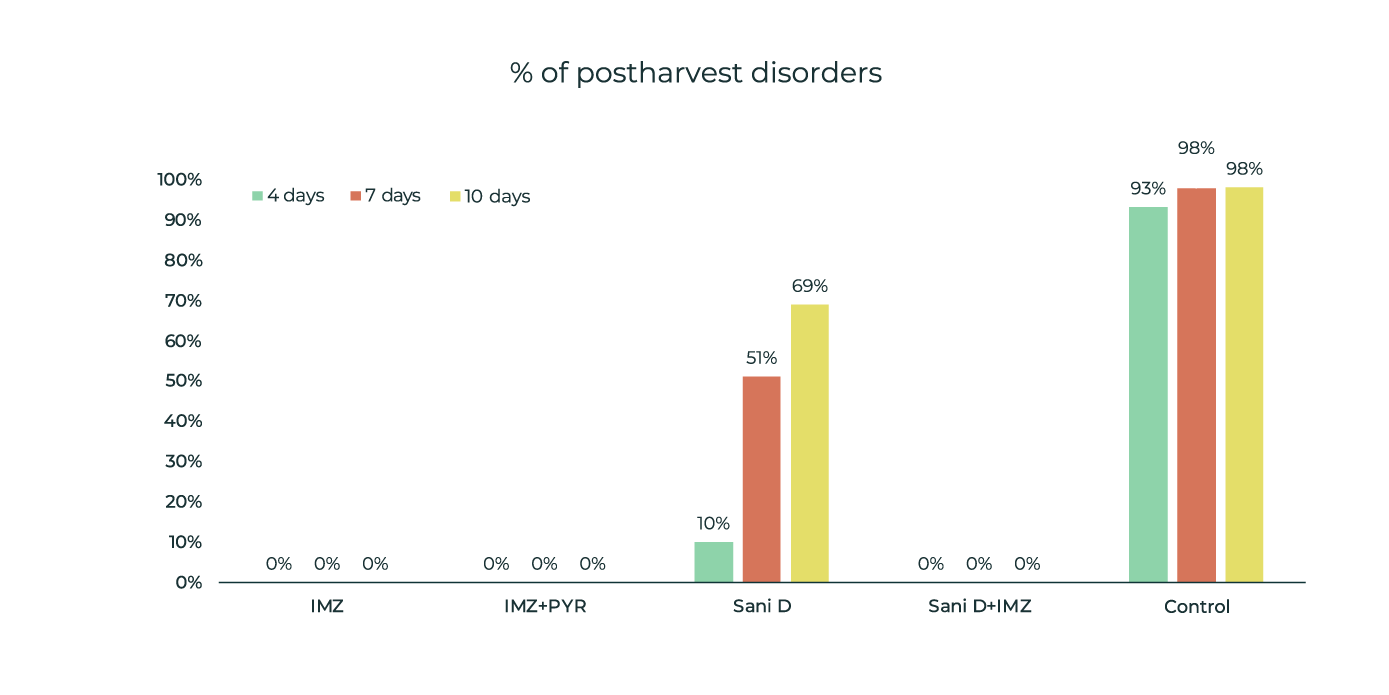
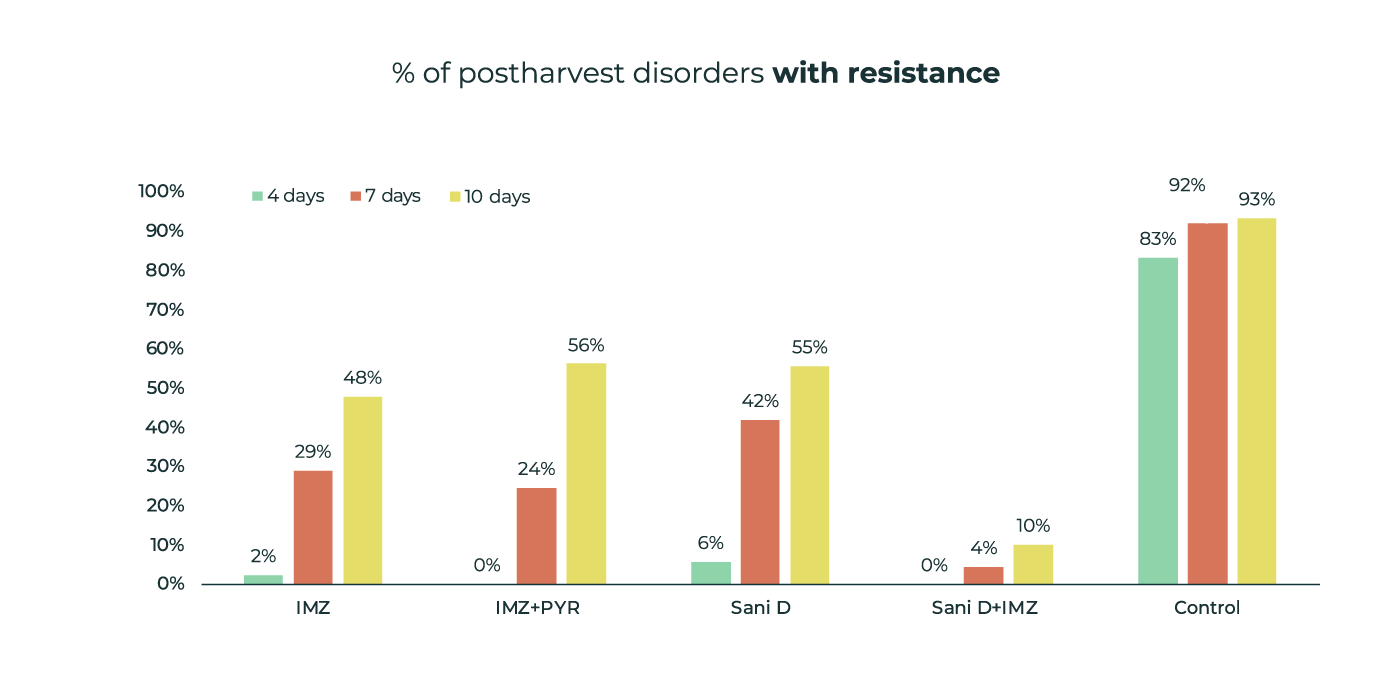
These results are reinforced by South African research centers and INTA studies, which evaluated our solution both individually and in combination with imazalil. The findings confirm that SANI D provides robust control under different levels of postharvest incidence. Its performance further improves when used alongside imazalil in scenarios where resistant strains are present, expanding its usefulness in complex seasons.
Distant markets: a better journey delivers a better sale
Exports to destinations such as the European Union, growing after the recent tariff policies of the United States, require fruit to maintain firmness, color, and appearance through several weeks of storage and transport, under more restrictive MRL requirements.
South Africa also exports to distant markets where travel time is critical, such as Asia and the Middle East. For these routes, Sanifruit offers specific solutions, the Sani RC range, which reduce cold‑damage incidence while preserving fruit quality without adding any active ingredient.
This technology optimizes transit preservation, maintains firmness, and prevents deterioration associated with prolonged low temperatures, which is especially useful for multi‑week journeys. Improved transit behavior increases commercial opportunities.
Conclusion: reducing active ingredients without losing efficacy is the new competitive standard
International markets demand postharvest programs with lower chemical loads and high stability at destination. Sanifruit’s natural solutions, validated by exporters and official institutions, offer control and versatility across different postharvest challenges and adapt to scenarios with or without resistance. The combination of these tools with active‑ingredient‑free technologies that minimize cold damage improves citrus preservation during export and facilitates access to markets with strict requirements.
Reduce what cannot be seen, the active ingredient, to improve what can be seen: the quality of your citrus.

Are you ready to begin the transition toward low‑chemical, high‑efficacy citrus export?
Our technical team can provide a personalized assessment to help you take the next step.